
Total 1265 Questions |
Updated On: May 21, 2026
Start Your Succesful IT Certification Journey With 3 Easy Steps!

1
DOWNLOAD PDF QUESTIONS
- Experience Complete Access to Practice Exam Questions
- Obtain Genuine Dumps PDF Questions
- Access a Free Questions Demo
- Receive Complimentary Updates for 90 Days

2
PRACTICE SESSIONS ONLINE
- Free IT Exam Practice Online
- Diverse Question Sets
- Convenient Browser-Based Test Platform
- Instant Access, No Installation Needed

3
SUCCESSFUL OUTCOME
- Efficient Exam Preparation
- Achieve High Grades
- Success Assured
- Kickstart a Brilliant Professional Career
100% Free Test Prep PSAT Practice Test Questions and Answers 2026
Start Learning with the Latest and Real 100% Free Test Prep PSAT Exam Questions
Page: 1
/ 253
Question 1
"The Cell Cycle" by Joseph Ritchie (2014) The process by which cells divide and multiply is known as the cell cycle. This cycle consists of two main phases: interphase and mitosis. Each phase consists of a series of clearly defined and observable steps. At the conclusion of the cycle, each parent cell produces two genetically identical daughter cells that may also replicate by proceeding through the cell cycle. Roughly ninety percent of the cell cycle is spent in interphase. Interphase is comprised of three main steps: the first gap phase, the synthesis phase (also called "S phase"), and the second gap phase. The initial gap phase is a period of cellular preparation in which the cell increases in size and readies itself for DNA synthesis. In the synthesis phase, or S phase, DNA replication occurs, so that when the cell divides, each daughter cell will have the DNA necessary to function properly. In the second gap phase, the cell grows in size and prepares for cellular division in the mitotic phase. At the end of each gap phase, the cell has to pass a regulatory checkpoint to ensure that nothing is going wrong. If anything has gone wrong, the checkpoints stop the cell from proceeding through the cell cycle any further. The next part of the cell cycle is mitosis. Mitosis is a form of cell division and is broken down into five distinct phases. During prophase, the genetic material contained in the cell’s chromatin condenses into distinct chromosomes. Prometaphase is marked by the breakdown of the cell’s nuclear envelope and the formation of centrosomes at the poles of the cell. During metaphase, the cell’s chromosomes are moved to the center of the cell. A checkpoint ensures that the chromosomes are properly aligned on the center and halts the cell cycle if any errors have occurred. In anaphase, chromosomes break apart at their center, or centromere, and sister chromatids move to opposite ends of the cell. Lastly, telophase and cytokinesis occur as nuclear membranes form to physically divide the cell into two new daughter cells. Chromosomes also unwind into loose chromatin during this part of mitosis. Cytokinesis is defined as the division of the each cell’s cytoplasm and organelles. At the conclusion of the cell cycle, two genetically identical daughter cells have formed. The cell cycle operates by a series of checkpoints and external cues. This system of checks enables the cell to enter a state of dormancy known as the gap zero phase when conditions or other factors inhibit the cell cycle. Conversely, unregulated and uncontrolled cellular division can occur under certain circumstances. A cell in a state of uncontrolled division is known to be cancerous. Lastly, cells have the ability to mediate their own death by way of apoptosis if certain genetic or physical abnormalities exist. The cell cycle is a complex process that enables cells to replicate and proliferate under a stringent set of checks and balances that produce healthy and viable daughter cells that are each able to perform the process in the future. About how much time does a cell spend undergoing mitosis in the cell cycle?
Answer: A
Question 2
Adapted from A Practical Treatise on the Hive and Honey-Bee by Lorenzo Lorraine Langstroth (1857 ed.) Of all the numerous enemies of the honey-bee, the Bee-Moth (Tinea mellonella), in climates of hot summers, is by far the most to be dreaded. So widespread and fatal have been its ravages in this country that thousands have abandoned the cultivation of bees in despair, and in districts which once produced abundant supplies of the purest honey, bee-keeping has gradually dwindled down into a very insignificant pursuit. Contrivances almost without number have been devised to defend the bees against this invidious foe, but still it continues its desolating inroads, almost unchecked, laughing as it were to scorn at all the so-called "moth-proof" hives, and turning many of the ingenious fixtures designed to entrap or exclude it into actual aids and comforts in its nefarious designs. I should feel but little confidence in being able to reinstate bee-keeping in our country into a certain and profitable pursuit if I could not show the apiarian in what way he can safely bid defiance to the pestiferous assaults of this, his most implacable enemy. I have patiently studied its habits for years, and I am at length able to announce a system of management founded upon the peculiar construction of my hives, which will enable the careful bee-keeper to protect his colonies against the monster. The bee-moth infects our apiaries, just as weeds take possession of a fertile soil. Before explaining the means upon which I rely to circumvent the moth, I will first give a brief description of its habits. Swammerdam, towards the close of the seventeenth century, gave a very accurate description of this insect, which was then called by the very expressive name of the "bee-wolf." He has furnished good drawings of it, in all its changes, from the worm to the perfect moth, together with the peculiar webs or galleries that it constructs and from which the name of Tinea galleria or “gallery moth” has been given to it by some entomologists. He failed, however, to discriminate between the male and female, which, because they differ so much in size and appearance, he supposed to be two different species of the wax-moth. It seems to have been a great pest in his time, and even Virgil speaks of the "dirum tineæ genus," the dreadful offspring of the moth; that is the worm. This destroyer usually makes its appearance about the hives in April or May, the time of its coming depending upon the warmth of the climate or the forwardness of the season. It is seldom seen on the wing (unless startled from its lurking place about the hive) until towards dark, and is evidently chiefly nocturnal in its habits. In dark cloudy days, however, I have noticed it on the wing long before sunset, and if several such days follow in succession, the female, oppressed with the urgent necessity of laying her eggs, may be seen endeavoring to gain admission to the hives. The female is much larger than the male, and "her color is deeper and more inclining to a darkish gray, with small spots or blackish streaks on the interior edge of her upper wings." The color of the male inclines more to a light gray; they might easily be mistaken for different species of moths. These insects are surprisingly agile, both on foot and on the wing. The motions of a bee are very slow in comparison. "They are," says Reaumur, "the most nimble-footed creatures that I know." "If the approach to the apiary be observed of a moonlight evening, the moths will be found flying or running round the hives, watching an opportunity to enter, whilst the bees that have to guard the entrances against their intrusion will be seen acting as vigilant sentinels, performing continual rounds near this important post, extending their antenna to the utmost, and moving them to the right and left alternately. Woe to the unfortunate moth that comes within their reach!" "It is curious," says Huber, "to observe how artfully the moth knows how to profit, to the disadvantage of the bees, which require much light for seeing objects; and the precautions taken by the latter in reconnoitering and expelling so dangerous an enemy." As it is used in the passage, the underlined word “discriminate” in the third paragraph most nearly means __________.
Answer: D
Question 3
Solve for x.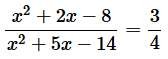
Answer: B
Question 4
A rectangle is x inches long and 3x inches wide. If the area of the rectangle is 108, what is the value of x?
Answer: C
Question 5
I trust a proposal for matrimony would seem more ______ were it written in the sky, or written on a scoreboard, or written in a test question for the SAT prep; which is what I am formally doing now in asking Teressa for her hand in marriage.
Answer: A
Page: 1
/ 253
Total 1265 Questions |
Updated On: May 21, 2026
© Copyrights TheExamsLabs 2026. All Rights Reserved
We use cookies to ensure your best experience. So we hope you are happy to receive all cookies on the TheExamsLabs.